
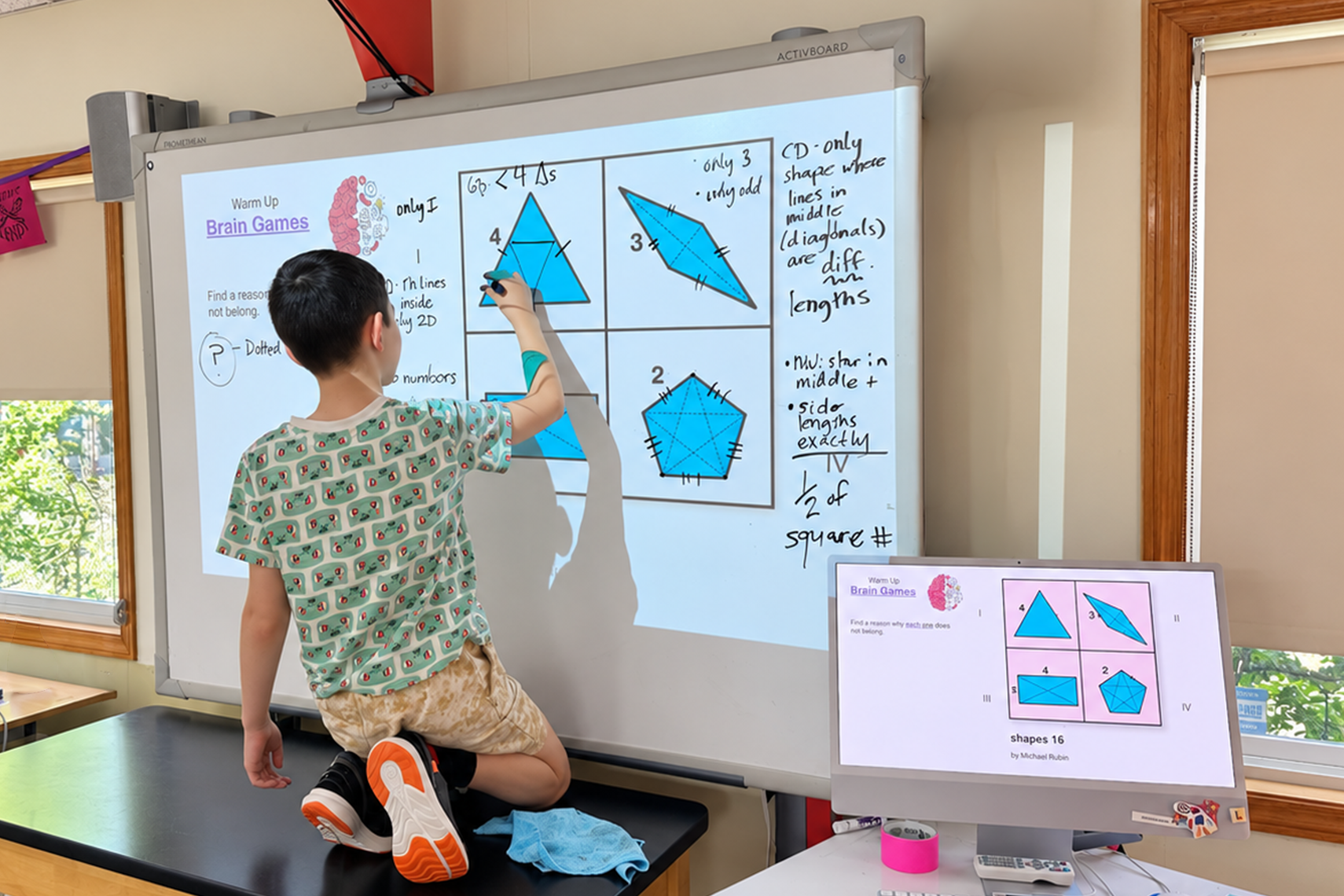
As my own children prepared to make the leap into sixth grade, I found myself reflecting on the transition to middle school. Even after spending more than 15 years working in middle schools, I didn't feel fully prepared to shepherd my own children through this stage of development.
There will always be unknowns, and every child will experience this transition differently. But I take some comfort in knowing that there are also plenty of things we can anticipate and prepare for.
As the Middle School Dean at Trillium Academy, a school for twice-exceptional (2e) students in Seattle, I think often about the additional support our learners may need during this transition.
Every fall, I see three familiar challenges emerge:
- More teachers, less continuity. Students move from having one primary classroom teacher (or a familiar homeschool environment) to navigating multiple teachers, classrooms, and expectations.
- A growing desire for independence. Middle schoolers want more control over their lives, even as they're still developing the skills to manage that independence.
- Increasing social complexity. Friendships change, peer relationships become more complicated, and it can be harder for adults to understand what's happening socially.
For twice-exceptional students, whose advanced abilities coexist with learning differences or disabilities, these changes can be especially challenging.
The good news is that there are concrete ways families and schools can help.
What's Actually Happening in There? Understanding the 2e Middle School Brain
Middle school brains and bodies are changing rapidly. Students are developing their ability to plan, organize, manage emotions, shift between tasks, and advocate for themselves.
These executive functioning (EF) skills continue developing well beyond adolescence. At the same time, middle school places greater demands on them. Students are expected to move between classes, track assignments, manage materials, navigate relationships with different adults, and take increasing responsibility for their learning.
For many 2e students, consistency, routine, and relationships are especially important. Creating those conditions within the changing structure of middle school takes some thought.
We can see this development happening in several areas:
- Cognitive: Students begin moving toward more abstract thinking. Learning differences may become more visible as academic expectations change, while students may also become better able to understand and communicate their needs.
- Social: The desire to belong becomes more pronounced. Friend groups shift, social cues can be misread, and experiences of rejection may feel especially intense. Some students seek out online communities where they can connect with others who share their identities or interests.
- Emotional: Greater self-consciousness, comparison with peers, and big emotional responses are all part of the picture.
- Behavioral: Students may experience fight, flight, freeze, or fawn responses, heightened sensitivity to fairness and justice, and occasional lapses in judgment.
For twice-exceptional learners, these changes can feel particularly disorienting because their development is often asynchronous.
A student might demonstrate advanced academic reasoning while still needing substantial support with organization, emotional regulation, or social relationships. They may make tremendous progress in one area while appearing to lose ground in another.
I often remind families that this uneven development is part of the picture. A stretch of significant social or emotional growth may mean academic progress looks different for a while, and vice versa.
Understanding this helps us respond to the child in front of us instead of relying exclusively on age- or grade-level expectations.

A Three-Stage Guide: Get Ready → Build → Stay Tuned In
When I think about helping families navigate the transition to middle school, I organize the process into three stages:
Get Ready: Build familiarity, relationships, and a sense of what to expect.
Build: Establish routines and systems that support your student's everyday needs.
Stay Tuned In: Keep communicating, notice what's changing, and adjust support as your child grows.
These stages overlap. You may return to an earlier one when something changes, and that's perfectly reasonable.
Stage 1: Get Ready
Before the school year begins, focus on helping your student—and yourself—get to know the people, routines, and expectations of their new school.
Meet the Key People
Get to know who does what. Who is your student's advisor? Who should you contact about academics, social concerns, or student support?
Attend orientations, Back-to-School Night, and other opportunities to connect with school staff.
At Trillium, our Parent Partnership meetings help families and educators begin building these relationships. They give us an opportunity to understand each student's strengths, needs, and experiences before the school year gets underway.
Learn the Rhythm
Spend time reviewing the daily schedule and school calendar together.
When are breaks? How does lunch work? What happens during transitions between classes? Are there field trips or events your student should know about?
For some students, seeing the schedule ahead of time makes a meaningful difference. Others may benefit from walking through what a typical school day will look like or knowing whom to ask when something unexpected happens.
Get Involved and Find Your Community
Middle school is also a transition for parents. You're likely spending less time in classrooms, and it may take more effort to build relationships with other families.
Consider joining the Parent Association, volunteering for field trips, attending parent socials, or connecting with families at pickup and drop-off.
At Trillium, field trip volunteering is one of my favorite ways for parents to connect with one another and see their children in a different setting.
Talk About Your Family's Values
What matters most to your family? What do you hope your student will experience as they grow?
Talk about these ideas together and explore how they connect to the school's values.
At Trillium, our core values are Consideration, Creativity, and Growth Mindset. They guide how we approach relationships, learning, and community life.
Middle school is a good time to begin talking with your child about what these values look like in everyday situations, including disagreements, friendships, and new challenges.
Visualize the Experience
Visit the school website, explore program offerings, attend orientation, and read the student handbook together.
Consider what information your student would find most helpful. Some want to know every detail. Others do better with a simple overview and reassurance that they'll have someone to ask when questions come up.
The goal is to make the unfamiliar a little more familiar.
Stage 2: Build
Once the school year begins, shift your attention to the routines and systems that will help your student navigate everyday life.
Your 2e kid needs consistency, routine, and relationships. Start there.
Protect Sleep and Morning Routines
Many neurodivergent children experience sleep challenges, and some take medication that may affect sleep or energy.
Work toward a reasonable evening routine and a morning rhythm that gives your child time to get ready without unnecessary stress.
There won't be one perfect routine for every family. Pay attention to what actually helps your student arrive at school rested and ready to connect.
Create Space to Recover After School
Middle school days can demand a great deal of energy, particularly for students who are managing sensory needs, social expectations, and executive functioning challenges throughout the day.
Think about what your child needs when they get home.
That might include a snack, movement, quiet time, time alone, family connection, or an opportunity to engage with a favorite interest.
Build a routine that accounts for nutrition, rest, movement, and healthy screen or technology habits. Your child's needs may change from day to day.
Fine-Tune the Homework Plan
Stay in communication with your student's advisor, dean, and classroom teachers about homework expectations.
At Trillium, we don't have a one-size-fits-all homework policy. We believe homework should reflect what students are ready for, the time and energy they have available outside school, and what families and educators determine will best support their learning.
If homework is creating ongoing conflict or leaving your child depleted, reach out. That information matters, and the plan may need adjusting.
Help Your Student Grow Their Social Network
Friendships and belonging become increasingly important during middle school. You may still need to help your child initiate plans, maintain friendships, and find activities where they can connect with peers.
Encourage opportunities through clubs, sports, Dungeons & Dragons, music, shared interests, or informal get-togethers.
Remember that students have different social needs. One child might thrive with a single close friend. Another might enjoy several social groups at school while preferring time alone after the day ends.
Multiple opportunities for connection can give students room to explore their interests and identities while discovering the kinds of friendships that feel right for them.
Stage 3: Stay Tuned In
You've prepared. You've started building the systems. Now the school year is underway, and it's time to stay tuned in.
As middle school progresses, your role as a parent gradually shifts toward support, guidance, and encouragement.
That transition takes practice. Your child may want more independence while continuing to need significant help with planning, decision-making, or communicating with adults.
Keep an eye on how things are going, and be prepared to adjust.
Communication Is Key
Listen without interrupting. Try to understand your child's perspective and look for areas of agreement.
I encourage parents to connect before correcting.
Instead of immediately jumping into solutions, ask questions that help your student begin developing their own.
One phrase I like is:
"I notice... I wonder..."
For example:
"I notice you seem more stressed lately when you're getting ready for school in the morning. I wonder what might be causing that and how I could help."
This creates an opening for conversation without requiring your child to have a perfectly formed explanation for what they're experiencing.
Use the School's Communication Tools
Check the school portal, read school communications, and attend meetings when possible.
Your student's teachers, advisor, dean, and student support team may be noticing things you don't see at home. Likewise, you may have information that helps us better understand what's happening at school.
Sharing those perspectives helps everyone respond more thoughtfully.
Coach Self-Advocacy
When your student encounters a challenge, give them opportunities to practice asking for what they need.
You might help them think through what they want to communicate, brainstorm options, or draft an email to a teacher.
Sometimes you'll still need to step in directly, and that's okay. Self-advocacy develops over time, with support.
At Trillium, families can connect with teachers about academics, the dean about student-life concerns, and advisors about broader questions involving a student's school experience.
Watch for Stress and Burnout
Pay attention to changes in your child's energy, behavior, mood, or willingness to engage with school.
Withdrawal, increased distress, exhaustion, or difficulty managing familiar routines may indicate that your child needs additional support.
For some students, puberty also brings changes that make it worth revisiting existing services, accommodations, or treatment plans.
Stay connected with the appropriate professionals, including mental-health providers, medical professionals, and your student's school support team.
Make Room for Purpose and Interests
Middle school is an important time for young people to explore who they are and what matters to them.
Encourage your child to develop interests, connect with mentors, take on meaningful projects, and set goals that feel worthwhile.
These can be small, short-term goals or more ambitious plans. The important thing is giving students opportunities to notice their own growth and develop a stronger sense of agency.
Keep Coming Back to the Three Stages
The transition to middle school doesn't end after the first few weeks. Your child's needs, relationships, interests, and capacities will continue changing throughout these years.
You can return to Get Ready → Build → Stay Tuned In each summer, after a difficult stretch, or whenever your family needs to reconsider what's working.
You may find that a routine that worked beautifully in September needs to change by January. A student who needed substantial support in sixth grade may be ready for more independence in seventh. Another may need additional structure during a particularly demanding period.
There's no single map for guiding a twice-exceptional child through middle school.
Partner with your student, other parents, teachers, school staff, and the broader community. Keep learning about who your child is becoming and what will help them along the way.
— Alexander Stern, Middle School Dean, Trillium Academy
Learn more about middle school at Trillium Academy. Explore our Middle School program and Student Support to see how we integrate engaging academics, executive functioning, and social-emotional learning for twice-exceptional students.